
Arriving in a new country can turn even simple days into long lists. There are names to remember, places to locate, routines to rebuild, and several small decisions competing for attention.
You do not need to understand an entire city at once.
Instead, begin with one block.
Choose a short route that starts and ends where you are staying. It might pass a bakery, a grocery shop, a café, or another everyday place that fits your own routine. Walk it when it naturally belongs in your day. The goal is not to complete an errand as quickly as possible. It is to observe.
On that first walk, notice one place you may want to recognize again. Simply record its name and what made it useful to you, without trying to compare it with every other option.
On the next walk, listen for one everyday word or greeting. You do not need a perfect translation or pronunciation in the moment. Write the place beside the word so you remember where you encountered it.
On a third walk, capture one detail that belongs to your own experience: a color on a building, the way a table is arranged, a familiar smell from a bakery, or a corner that helps you know where to turn.
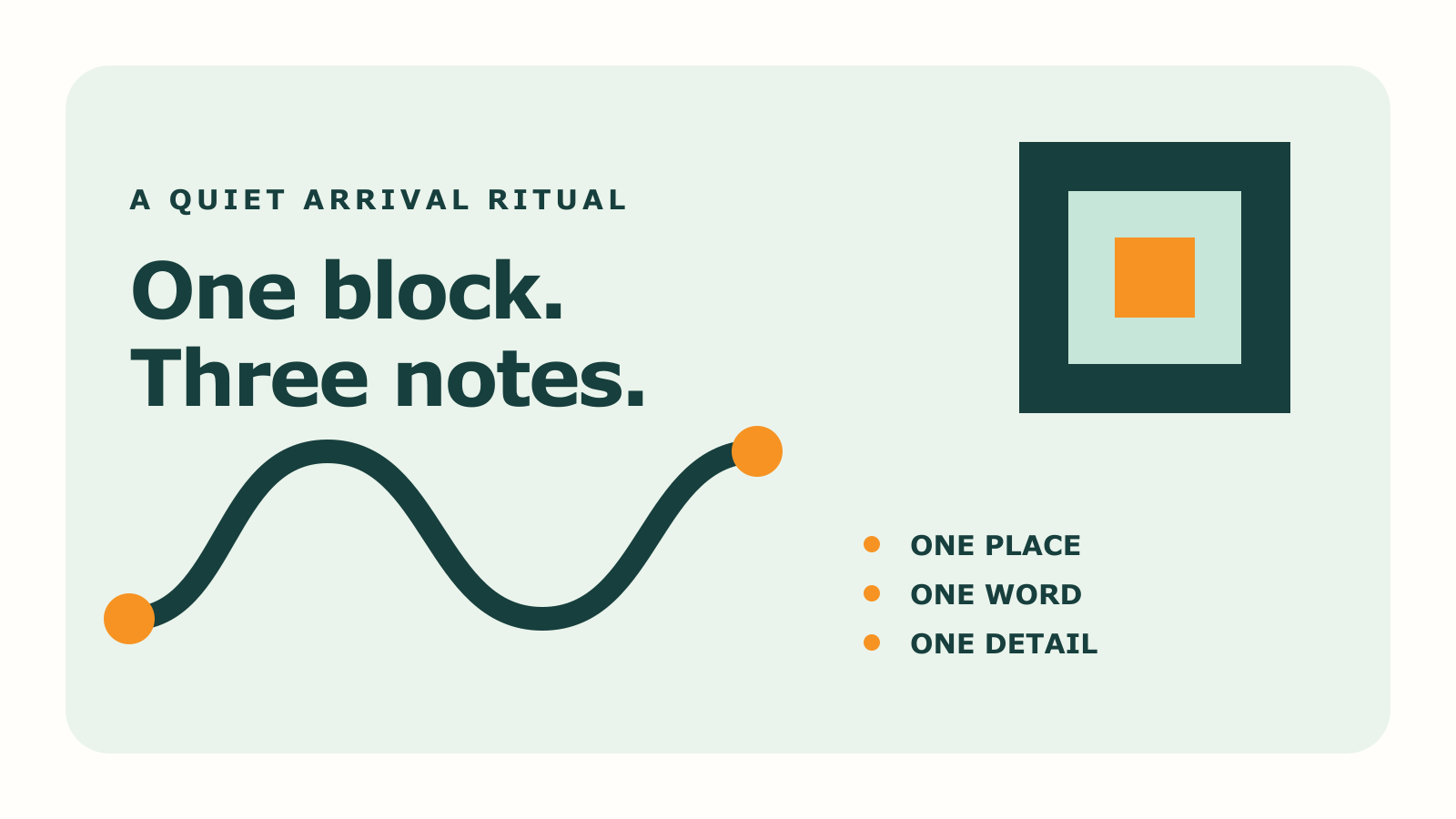
Now make a tiny map with only three notes:
- One place: somewhere you would recognize tomorrow.
- One word: something you heard and want to remember.
- One detail: a personal landmark that makes the route easier to describe.
Use the notes to remember what you have actually seen, heard, and found useful along the route.
Repeat the exercise only if it feels useful. Your map can stay small. Over time, it may gain another place, another word, or another detail. There is no deadline and no ideal version.
If you repeat the route, add a new place only when it is useful to your routine. Keep the notes short enough to use on your next walk.
Save this three-note prompt for your first week and adapt it to your own pace.